Ayatul Kursi by Abdul Rahman Al-Sudais is the full recitation of the Throne Verse (Qur’an 2:255) by Sheikh Abdul Rahman ibn Abdulaziz Al-Sudais — the Chief Imam of Masjid al-Haram in Makkah and President of the General Presidency for the Affairs of the Two Holy Mosques. Press play on the main player below to listen online, or press the green button to download the 320kbps HD MP3 free — works fully offline for sleep, morning routine, memorisation, and daily adhkar. The audio is the same file whether search brought you here for “Sudais Ayatul Kursi MP3 free download“, “Ayatul Kursi tilawat by Abdul Rahman Al-Sudais“, or “Ayatul Kursi Sudais 320kbps“.
Play & Download Ayatul Kursi by Abdul Rahman Al-Sudais — 320kbps MP3
Ayatul Kursi — Abdul Rahman Al-Sudais
Chief Imam of Masjid al-Haram, Makkah · Full verse (Qur’an 2:255) · 320kbps MP3
Press the gold play button to start listening. Turn on Loop for repeat 10× or 100× playback.
About Sheikh Abdul Rahman Al-Sudais
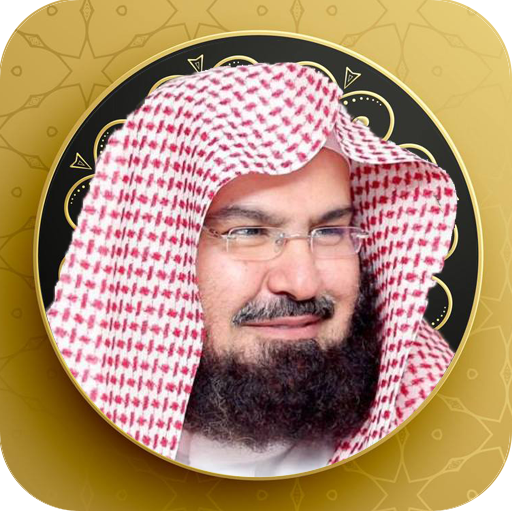
Sheikh Abdul Rahman ibn Abdulaziz Al-Sudais
Saudi Qari · Chief Imam & Khateeb of Masjid al-Haram, Makkah · Also written As-Sudais, Sudais, Sudayis
Sheikh Abdul Rahman ibn Abdulaziz ibn Abdullah ibn Muhammad Al-Sudais was born on 10 February 1960 (13 Sha’ban 1379 AH) in Al-Bukayriyah, Al-Qassim region of Saudi Arabia, into the noble Anzah tribe. His family moved to Riyadh when he was a child, where he memorised the complete Qur’an by the age of twelve under the guidance of Sheikh Abdulrahman Al-Faryan. He went on to earn a bachelor’s degree in Sharia from the College of Sharia at Riyadh Islamic University (1979), a master’s from Umm al-Qura University in Makkah (1987), and a PhD in Islamic Jurisprudence (Usul al-Fiqh) from Umm al-Qura in 1995.
At the extraordinarily young age of 24, in 1404 AH (1984 CE), Sheikh Sudais was appointed as an imam and khateeb of Masjid al-Haram — the Grand Mosque of Makkah — a position of immense responsibility usually reserved for far more senior scholars. He has led Ramadan Taraweeh at the Grand Mosque continuously ever since, and his voice has become one of the most recognised sounds in the Muslim world through those broadcasts.
In 2012 (1433 AH), by royal decree, Sheikh Sudais was appointed President of the General Presidency for the Affairs of the Two Holy Mosques — the administrative and spiritual head of both Masjid al-Haram in Makkah and Masjid an-Nabawi in Madinah. This makes him one of the most influential religious figures in the contemporary Muslim world. He has also served as a professor at Umm al-Qura University and received honorary doctorates from several international universities.
His full Qur’an mushaf recording in Hafs ‘an ‘Asim — produced in the 1990s and refined over the years — is one of the most-listened-to Qur’an recordings in modern history. What makes searchers specifically type “Sudais Ayatul Kursi MP3 free download” is his signature style: a deep, resonant bass voice, powerful emotional swells that peak on the words describing Allah’s majesty, and strong tajwid that follows every classical rule. His Ayatul Kursi recording runs about 55 seconds and captures the awe-inducing atmosphere of the Grand Mosque itself.
- 1960 Born 10 February (13 Sha’ban 1379 AH) in Al-Bukayriyah, Al-Qassim, Saudi Arabia.
- Age 12 Memorised the complete Qur’an under Sheikh Abdulrahman Al-Faryan in Riyadh.
- 1979 Bachelor’s degree in Sharia from Riyadh Islamic University.
- 1984 Appointed imam and khateeb of Masjid al-Haram at age 24 — extraordinary at this age.
- 1987 Master’s degree from Umm al-Qura University, Makkah.
- 1995 PhD in Islamic Jurisprudence (Usul al-Fiqh) from Umm al-Qura University.
- 1990s Released the complete Hafs ‘an ‘Asim mushaf recording — the source of this Ayatul Kursi file.
- 2012 Appointed President of the General Presidency for the Affairs of the Two Holy Mosques.
- Ongoing Leads Ramadan Taraweeh at Masjid al-Haram — broadcast globally to millions.
Why Ayatul Kursi by Sheikh Sudais Is So Widely Loved
Search interest for “Ayatul Kursi MP3 by Abdul Rahman Al-Sudais” is consistently one of the most-searched reciter-specific Islamic audio queries worldwide. There are four practical reasons.
The voice of Masjid al-Haram
For over 40 years, millions have listened to Sheikh Sudais lead Taraweeh at the Grand Mosque. His voice is instantly familiar — playing his Ayatul Kursi at home connects listeners to that Haramain atmosphere.
Deep, powerful bass
Sheikh Sudais’s low, resonant voice fills a room. Especially effective for evening and before-sleep listening when its calming depth settles the heart.
Emotional Haramain tajwid
Rigorous tajwid combined with emotional delivery — his madd on the words of Allah’s names swells with awe. A masterclass in reciting with khushu’.
Broadcasts & recognition
Recognised worldwide from Ramadan broadcasts. Now also as President of the Two Holy Mosques — his name carries administrative authority in the Muslim world.
The recitation above is Ayatul Kursi — Qur’an 2:255, verse 255 of Surah Al-Baqarah. Read the full Arabic mushaf-style text with tajwid colouring on our Ayatul Kursi Arabic text page, and the meaning line-by-line on the English translation page.
Al-Sudais’s Recitation Style — A Tajwid Breakdown
For memorisation and tajwid students, the practical question is: what specifically is Sheikh Sudais doing that makes his Ayatul Kursi so distinct? Here is a breakdown of the technical choices in this 55-second recording.
| Tajwid feature | Sheikh Sudais’s choice | Effect on the listener |
|---|---|---|
| Vocal register | Deep bass, mid-to-low range with strong chest resonance | Powerful, awe-inducing — the signature Haramain sound. |
| Madd al-munfasil (separated elongation) | Held 4 harakat, sometimes stretched to 5 for emphasis | Consistent, easy to match if you are memorising. |
| Madd al-‘aridh (elongation before a pause) | Full 4–6 harakat at every waqf, with strong emotional emphasis | Long, measured stops that let the meaning sink in. |
| Ghunnah (nasalisation) | Full 2-harakat nasal resonance, rich and deep | Adds a warm, meditative quality — excellent on headphones. |
| Qalqalah (bouncing letters) | Strong, precise qalqalah — especially at pauses | Every bouncing letter is fully articulated, textbook-correct. |
| Emotional peaks | Voice swells on al-Hayyul-Qayyum and al-‘Aliyyul-‘Azim | Draws attention to the names of Allah — hallmarks of khushu’ recitation. |
| Waqf (stopping) points | Follows the mushaf’s classical waqf marks precisely, with generous breath | A reliable reference for reciters learning where to pause. |
| Overall tempo | Tartil (slow-medium) — ~55 seconds for the full verse | Slower than Alafasy, faster than pure mujawwad — ideal for reflection. |
If you’re using this recording for memorisation, focus on matching his consistent madd lengths and the exact points where he takes breath. Use the 0.75× speed setting to stretch each syllable, then work up to full speed as your ear adjusts.
Sudais vs. Al-Muaiqly vs. Al-Shuraim — Comparing the Haramain Imams
Sheikh Sudais is one of several appointed imams of Masjid al-Haram. The three most-listened-to Haramain voices for Ayatul Kursi are Sheikh Abdul Rahman Al-Sudais, Sheikh Maher Al-Muaiqly, and Sheikh Saud Al-Shuraim — each brings a very different feel to the same verse.
| Attribute | Abdul Rahman Al-Sudais | Maher Al-Muaiqly | Saud Al-Shuraim |
|---|---|---|---|
| Role | Chief Imam & President of the Two Holy Mosques | Imam of Masjid al-Haram | Imam & khateeb of Masjid al-Haram |
| Appointed to Haram | 1984 (age 24) | 2007 (Ramadan 1428 AH) | 1991 (1412 AH) |
| Vocal register | Deep bass, powerful chest voice | Warm low-mid, soft & emotional | Strong tenor with majestic peaks |
| Emotional feel | Powerful, awe-inducing | Restrained, contemplative | Majestic, traditional |
| Ayatul Kursi tempo | ~55 seconds (medium-slow) | ~60 seconds (slow tartil) | ~50 seconds (steady tartil) |
| Best for before-sleep | Yes — deeper, more solemn | Yes — top pick, softest finish | Yes, but more energetic |
| Best for Ramadan atmosphere | Yes — the classic Sudais Taraweeh | Yes — especially last-10-nights dua | Yes — traditional Haram sound |
| Best for memorisation | Good — steady, textbook tajwid | Very good at 0.75× speed | Good — steady, uniform pace |
Short verdict. If you want the powerful, unmistakable voice of the Grand Mosque, Sheikh Sudais is the natural choice — especially for Ramadan atmosphere. For soft, contemplative before-sleep listening choose Sheikh Maher Al-Muaiqly. For classroom-clear tajwid learning at any hour, Sheikh Mishary Rashid Alafasy‘s Kuwaiti style is the classic teaching reference. All three are available in our main audio hub.
Watch Sheikh Sudais Recite Ayatul Kursi (Video)
Seeing the reciter often helps with pronunciation — you can see the exact mouth shape for each letter and match the breath timing. Sheikh Sudais’s recorded video Qur’an sessions are widely used for study by tajwid students worldwide.
Watch Sheikh Sudais recite Ayatul Kursi with clear on-screen text — ideal for following along and memorising the correct pronunciation.
When to Play Sheikh Sudais’s Ayatul Kursi
Search phrases like “Ayatul Kursi before sleep by Abdul Rahman Al-Sudais“, “morning recitation by Al-Sudais“, and “Ayatul Kursi night recitation Sudais” are among the most common on this page. Here is a Sunnah-grounded daily routine.
Morning recitation
Play Sudais’s Ayatul Kursi as part of your morning adhkar. His powerful voice sets a strong, focused tone before the day begins.
Post-prayer
Sunan an-Nasa’i 9848: whoever recites Ayatul Kursi after every obligatory prayer, nothing prevents him from Paradise except death. Recite yourself; the audio helps you learn.
Night recitation
Play Sudais in the evening adhkar. His deep register works especially well as the day winds down.
For sleep
Sahih al-Bukhari 2311: whoever recites Ayatul Kursi before sleeping has a guardian from Allah with him until morning. Recite quietly along with the audio — that is the reward-bearing action.
Travel & leaving home
Keep the offline file on your phone. Play it in the car for the commute — the deep voice fills the space naturally.
Tahajjud & Taraweeh
Sudais’s voice IS the sound of Ramadan Taraweeh from Makkah for millions of Muslims. Listening in the last third of the night is a strongly recommended habit.
Use This Recitation to Memorise Ayatul Kursi
Sheikh Sudais’s steady tempo, deep resonance, and clear waqf points make his Ayatul Kursi excellent for memorisation. Here is a simple 5-step method using the player above:
- Open the Arabic text alongside the audio. Use our Ayatul Kursi Arabic text page in one tab and this page in another.
- Set the speed to 0.75× using the speed button below the player. Every letter becomes easier to hear.
- Play one phrase, pause, repeat aloud. Use the progress bar or arrow keys to jump back — don’t rush to the next phrase.
- Loop the whole verse using the Loop button. Recite quietly along until you can complete each phrase without looking.
- Test yourself with the audio muted. Then unmute for the final check. Repeat over 3–5 days — most people memorise Ayatul Kursi within a week using this method.
For a printable version, download the Ayatul Kursi PDF with Arabic, transliteration, and English on one page.
Ayatul Kursi with Arabic Text, English Translation & Transliteration
Users often search “Ayatul Kursi with Arabic text by Abdul Rahman Al-Sudais“, “with English translation“, or “with transliteration“. The MP3 itself is the Arabic recitation — to read alongside it, open any of these text resources in a second tab and follow along while Sheikh Sudais recites.
Ayatul Kursi Repeat 10 Times & 100 Times — What You Actually Need to Know
A large portion of search traffic looks for “Ayatul Kursi repeat 10 times by Abdul Rahman Al-Sudais” and “repeat 100 times“. Before pointing to a file, let’s separate what is authentically narrated from what is a modern listening/dhikr aid.
What is actually narrated in the Sunnah?
- Once after every fard prayer (Sunan an-Nasa’i 9848; graded sahih) — the direct promise of Paradise for consistency.
- Once before sleeping (Sahih al-Bukhari 2311) — a protector from Allah stays with you until morning.
- On entering the home and at times of anxiety — strongly recommended by classical scholars.
Honest note: No authentic hadith specifies a reward for reciting Ayatul Kursi exactly 10 times, 100 times, 313 times, or any other counted quantity. The consistently narrated Sunnah is the daily pattern above — after each of the five prayers and before sleep. See our full benefits and hadith sources page for the graded references.
What are “10 times” and “100 times” MP3s actually for?
They’re listening and memorisation aids. A file that repeats Ayatul Kursi 10 or 100 times gives you a long, steady loop for driving, cleaning, studying, or reflection. Sheikh Sudais’s deep, unhurried delivery makes both formats easy to loop for extended periods without listener fatigue.
Build your own 10x or 100x loop with this player
- Save the 320kbps Ayatul Kursi Sudais MP3 to your phone.
- Press the Loop button below the player above — the recitation now repeats endlessly.
- Recite along quietly under your breath. Listening builds familiarity; the reward-bearing action in the Sunnah is your own recitation.
Reading along in your language? The same Sudais Arabic MP3 is paired with local translation on our Bangla, Hindi, Urdu, Tamil, Indonesian, Malay, and Turkish pages — each shows the verse text alongside a shared player.
File details: sudais-ayatul-kursi-mp3-download.mp3 · MP3 320 kbps HD · approx. 2–3 MB · Arabic recitation of Qur’an 2:255 · free for personal and community use (see terms). Full mobile and desktop download instructions are on the Ayatul Kursi MP3 hub.
Abdul Rahman Al-Sudais Ayatul Kursi — FAQ
Which mushaf riwayah is Sheikh Sudais’s Ayatul Kursi recorded in?
The recording on this page is from Sheikh Sudais’s complete Hafs ‘an ‘Asim mushaf — the reading used across the Arabian Peninsula, Egypt, Turkey, and most of the Muslim world. It is the same reading you hear during Taraweeh at Masjid al-Haram every Ramadan.
How long is the Al-Sudais Ayatul Kursi recording?
Approximately 55 seconds at 1.0× playback speed. For memorisation, try 0.75× (about 75 seconds) so you can lock onto each madd length; then work back up to full speed. Use the Loop button to repeat the file as many times as you like.
When was Sheikh Sudais appointed to Masjid al-Haram?
He was appointed imam and khateeb of Masjid al-Haram in 1404 AH (1984 CE) at the age of 24 — a rare appointment for someone so young. In 2012 he became President of the General Presidency for the Affairs of the Two Holy Mosques, making him the administrative head of both Masjid al-Haram in Makkah and Masjid an-Nabawi in Madinah.
Is Sheikh Sudais a scholar as well as a reciter?
Yes. He holds a bachelor’s, master’s, and PhD in Islamic Jurisprudence (Usul al-Fiqh) from Umm al-Qura University in Makkah. He has also served as a professor at Umm al-Qura, and receives honorary doctorates internationally. This academic background is unusual among reciters and adds significant weight to his imamate at Masjid al-Haram.
How does Sudais’s Ayatul Kursi compare to Alafasy and Al-Muaiqly?
Sheikh Sudais: powerful, deep bass, emotional Haramain Taraweeh style. Sheikh Mishary Alafasy: warmer, more measured Kuwaiti style — the classic memorisation choice. Sheikh Maher Al-Muaiqly: softer, more contemplative Makkah style — a favourite for before-sleep listening. See the full comparison table above.
Why do people spell it “Sudais” vs “Sudayis” vs “As-Sudais”?
The Arabic name is As-Sudais (السديس). Transliteration into Latin letters varies: Al-Sudais, As-Sudais, Sudais, Sudayis, Al-Sudayis, and Abd al-Rahman Al-Sudais all appear online. They all refer to the same person. Search engines usually treat them as the same query.
How do I download Ayatul Kursi by Abdul Rahman Al-Sudais in MP3?
Press the green Download Sudais MP3 button in the main player above. You’ll get the full Ayatul Kursi in 320kbps — no signup, no watermark. On iPhone, long-press and choose Download Linked File; on Android the file saves to Downloads automatically.
Is this Ayatul Kursi Sudais MP3 really free?
Yes. Free to stream, free to download, and free for personal and non-commercial community use. The 320kbps file is roughly 2–3 MB.
Who is Sheikh Abdul Rahman Al-Sudais?
Sheikh Abdul Rahman ibn Abdulaziz Al-Sudais is the Chief Imam and Khateeb of Masjid al-Haram in Makkah and President of the General Presidency for the Affairs of the Two Holy Mosques since 2012. Born in 1960 in Al-Qassim, Saudi Arabia, appointed to Masjid al-Haram in 1984 at age 24, PhD in Islamic Jurisprudence from Umm al-Qura University.
Is there an authentic hadith about reciting Ayatul Kursi 10 or 100 times?
No authentic hadith specifies a reward for reciting Ayatul Kursi exactly 10 times, 100 times, or any other counted quantity. The consistently narrated Sunnah is once after each of the five fard prayers (Sunan an-Nasa’i 9848) and once before sleeping (Sahih al-Bukhari 2311). “Repeat 10x / 100x” MP3s are useful listening and memorisation aids, not a Sunnah quantity. See our full benefits and hadith page.
Is this Ayatul Kursi good for listening before sleep?
Yes — Sheikh Sudais’s deep, resonant delivery is one of the most-listened voices for before-sleep recitation. The Sunnah action in Sahih al-Bukhari 2311 is to recite Ayatul Kursi yourself before sleeping. Playing the audio while quietly reciting along helps you learn the tajwid correctly.
Can I use this recitation for morning and evening adhkar?
Absolutely. Many listeners play Sudais Ayatul Kursi in the morning after Fajr and again in the evening after Asr as part of their daily adhkar. The 320kbps MP3 is small, plays offline on any phone, and Sheikh Sudais’s steady tempo is easy to loop.
Can I use this to memorise Ayatul Kursi?
Yes — it’s a strong memorisation reference. Pair the audio with the Arabic text and transliteration, use the Loop button below the player, and try the 0.75× speed setting to hear each letter clearly. See the memorisation method above.
Does the file come with Arabic text, English translation, and transliteration?
The MP3 itself is Arabic recitation only. To read along, open our Arabic text page, the English translation page, and the transliteration on the same page. All three are linked in the “with text” section above.
Is “Ayatul Kursi Tilawat by Abdul Rahman Al-Sudais” the same as “Recitation”?
Yes. “Tilawat” (or “tilawah”) is the Arabic-origin word used in Urdu, Hindi, Bengali, Malay and Indonesian for Qur’anic recitation. The audio file is the same regardless of which spelling brought you here.
What bitrate is the file, and will it play offline?
320 kbps — the highest standard MP3 quality — and yes, it plays offline in Apple Music, Samsung Music, VLC, Files, or any audio app once downloaded. The file is around 2–3 MB.
Related Resources on ayatulkursi.org
Reciter: Sheikh Abdul Rahman Al-Sudais, Chief Imam of Masjid al-Haram, Makkah · Verse: Ayatul Kursi · Qur’an 2:255 · Format: MP3, 320 kbps HD · Editorial: policy · sources · about