Surah 18 · Verses 1–10 & 101–110
Surah Kahf First and Last 10 Verses PDF
Download the first and last ten verses of Surah Kahf as a clear PDF. The Prophet said whoever learns them by heart is protected from the Dajjal. There is a version for your phone, A4 copies with English or Urdu translation, and a large print booklet. You can also read and listen to all 20 verses right here.
- Free, no signup
- One-tap download
- Clear text, not a scan
- Prints sharply
Updated 5 November 2026 · How we check our sources
- Surah
- 18 · Surah Kahf
- Verses
- 1–10 & 101–110
- Revealed in
- Makkah
- Juz
- 15 & 16
- Mushaf pages
- 293, 294, 304
- Also called
- Al-Kahf 1–10, Al-Kahf 101–110, Kahf 10 ayat
Download Surah Kahf First and Last 10 Verses PDF
Every file is free and starts downloading as soon as you tap. No sign up, no waiting page.
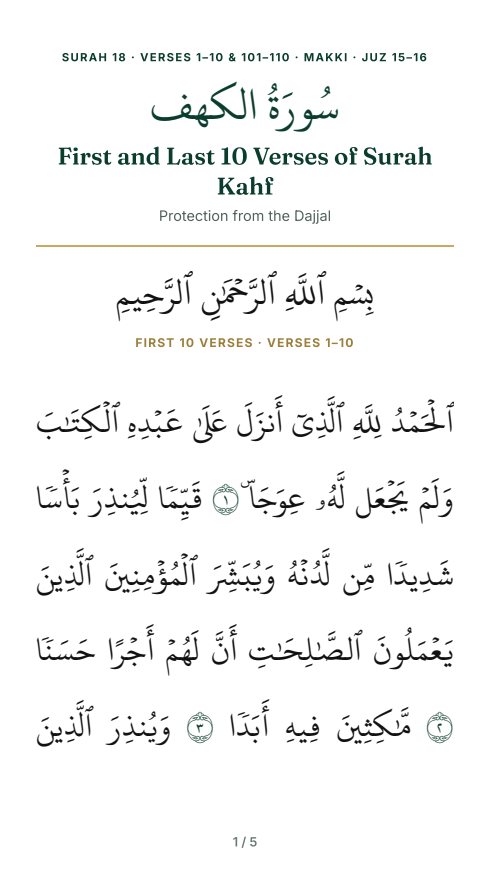 Phone
Phone size, Arabic only
Big Arabic text in one column, made for reading on your phone without zooming in.Download PDF A4
A4 with English and transliteration
Each verse in Arabic, with easy transliteration and the English meaning below it.Download PDF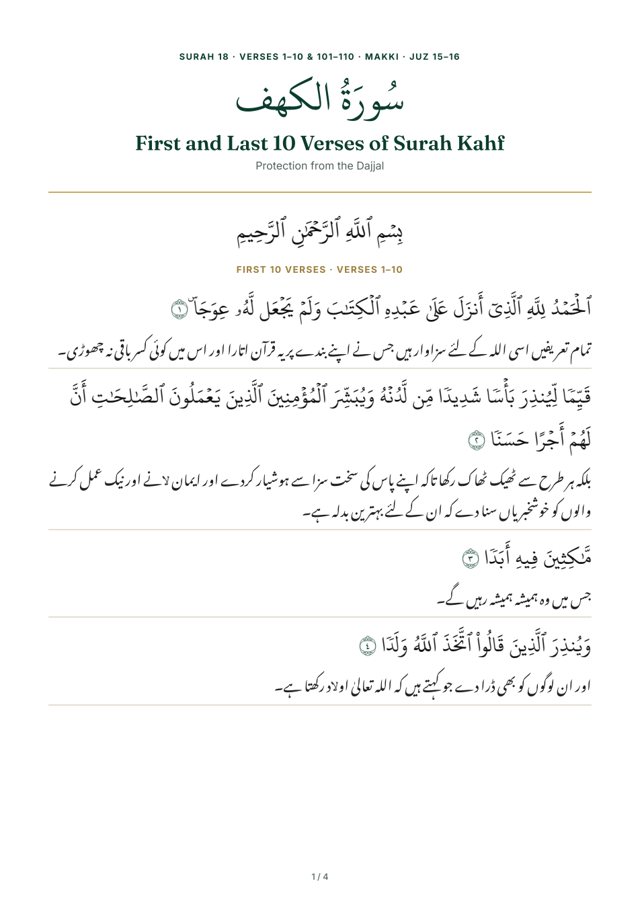 A4
A4 with Urdu translation
Each verse with the Urdu translation by Maulana Muhammad Junagarhi.Download PDF Booklet
Large print booklet
Extra large Arabic for elders and group reading. Prints on 2 sheets of A4.Download PDF
Every PDF ends with a short reminder on handling the Quran with respect, and a QR code that brings the reader back to this page to listen or get another version.
Read and listen to Surah Kahf First and Last 10 Verses
All 20 verses with transliteration and English meaning. Tap play on any verse to hear Sheikh Mishary Alafasy, and the recitation carries on through both parts.
Continue from verse 1
بِسْمِ ٱللَّهِ ٱلرَّحْمَـٰنِ ٱلرَّحِيمِ
The first 10 verses Verses 1–10
ٱلْحَمْدُ لِلَّهِ ٱلَّذِىٓ أَنزَلَ عَلَىٰ عَبْدِهِ ٱلْكِتَـٰبَ وَلَمْ يَجْعَل لَّهُۥ عِوَجَا ۜ ١
Alhamdu lillahi allatheeanzala ʿala ʿabdihi alkitaba walam yajʿal lahuʿiwaja
Praise be to Allah Who hath revealed the Scripture unto His slave, and hath not placed therein any crookedness,
قَيِّمًا لِّيُنذِرَ بَأْسًا شَدِيدًا مِّن لَّدُنْهُ وَيُبَشِّرَ ٱلْمُؤْمِنِينَ ٱلَّذِينَ يَعْمَلُونَ ٱلصَّـٰلِحَـٰتِ أَنَّ لَهُمْ أَجْرًا حَسَنًا ٢
Qayyiman liyunthira ba/san shadeedanmin ladunhu wayubashshira almu/mineena allatheenayaʿmaloona assalihati anna lahum ajran hasana
(But hath made it) straight, to give warning of stern punishment from Him, and to bring unto the believers who do good works the news that theirs will be a fair reward,
وَيُنذِرَ ٱلَّذِينَ قَالُوا۟ ٱتَّخَذَ ٱللَّهُ وَلَدًا ٤
Wayunthira allatheena qalooittakhatha Allahu walada
And to warn those who say: Allah hath chosen a son,
مَّا لَهُم بِهِۦ مِنْ عِلْمٍ وَلَا لِـَٔابَآئِهِمْ ۚ كَبُرَتْ كَلِمَةً تَخْرُجُ مِنْ أَفْوَٰهِهِمْ ۚ إِن يَقُولُونَ إِلَّا كَذِبًا ٥
Ma lahum bihi min ʿilmin walali-aba-ihim kaburat kalimatan takhruju min afwahihimin yaqooloona illa kathiba
(A thing) whereof they have no knowledge, nor (had) their fathers, Dreadful is the word that cometh out of their mouths. They speak naught but a lie.
فَلَعَلَّكَ بَـٰخِعٌ نَّفْسَكَ عَلَىٰٓ ءَاثَـٰرِهِمْ إِن لَّمْ يُؤْمِنُوا۟ بِهَـٰذَا ٱلْحَدِيثِ أَسَفًا ٦
Falaʿallaka bakhiʿun nafsaka ʿalaatharihim in lam yu/minoo bihatha alhadeethiasafa
Yet it may be, if they believe not in this statement, that thou (Muhammad) wilt torment thy soul with grief over their footsteps.
إِنَّا جَعَلْنَا مَا عَلَى ٱلْأَرْضِ زِينَةً لَّهَا لِنَبْلُوَهُمْ أَيُّهُمْ أَحْسَنُ عَمَلًا ٧
Inna jaʿalna ma ʿalaal-ardi zeenatan laha linabluwahum ayyuhum ahsanuʿamala
Lo! We have placed all that is on the earth as an ornament thereof that We may try them: which of them is best in conduct.
وَإِنَّا لَجَـٰعِلُونَ مَا عَلَيْهَا صَعِيدًا جُرُزًا ٨
Wa-inna lajaʿiloona maʿalayha saʿeedan juruza
And lo! We shall make all that is thereon a barren mound.
أَمْ حَسِبْتَ أَنَّ أَصْحَـٰبَ ٱلْكَهْفِ وَٱلرَّقِيمِ كَانُوا۟ مِنْ ءَايَـٰتِنَا عَجَبًا ٩
Am hasibta anna as-habaalkahfi warraqeemi kanoo min ayatinaʿajaba
Or deemest thou that the People of the Cave and the Inscription are a wonder among Our portents?
إِذْ أَوَى ٱلْفِتْيَةُ إِلَى ٱلْكَهْفِ فَقَالُوا۟ رَبَّنَآ ءَاتِنَا مِن لَّدُنكَ رَحْمَةً وَهَيِّئْ لَنَا مِنْ أَمْرِنَا رَشَدًا ١٠
Ith awa alfityatu ilaalkahfi faqaloo rabbana atina minladunka rahmatan wahayyi/ lana min amrinarashada
When the young men fled for refuge to the Cave and said: Our Lord! Give us mercy from Thy presence, and shape for us right conduct in our plight.
The last 10 verses Verses 101–110
ٱلَّذِينَ كَانَتْ أَعْيُنُهُمْ فِى غِطَآءٍ عَن ذِكْرِى وَكَانُوا۟ لَا يَسْتَطِيعُونَ سَمْعًا ١٠١
Allatheena kanat aʿyunuhumfee ghita-in ʿan thikree wakanoo layastateeʿoona samʿa
Those whose eyes were hoodwinked from My reminder, and who could not bear to hear.
أَفَحَسِبَ ٱلَّذِينَ كَفَرُوٓا۟ أَن يَتَّخِذُوا۟ عِبَادِى مِن دُونِىٓ أَوْلِيَآءَ ۚ إِنَّآ أَعْتَدْنَا جَهَنَّمَ لِلْكَـٰفِرِينَ نُزُلًا ١٠٢
Afahasiba allatheena kafarooan yattakhithoo ʿibadee min doonee awliyaainna aʿtadna jahannama lilkafireena nuzula
Do the disbelievers reckon that they can choose My bondmen as protecting friends beside Me? Lo! We have prepared hell as a welcome for the disbelievers.
قُلْ هَلْ نُنَبِّئُكُم بِٱلْأَخْسَرِينَ أَعْمَـٰلًا ١٠٣
Qul hal nunabbi-okum bil-akhsareenaaʿmala
Say: Shall We inform you who will be the greatest losers by their works?
ٱلَّذِينَ ضَلَّ سَعْيُهُمْ فِى ٱلْحَيَوٰةِ ٱلدُّنْيَا وَهُمْ يَحْسَبُونَ أَنَّهُمْ يُحْسِنُونَ صُنْعًا ١٠٤
Allatheena dalla saʿyuhumfee alhayati addunya wahum yahsaboonaannahum yuhsinoona sunʿa
Those whose effort goeth astray in the life of the world, and yet they reckon that they do good work.
أُو۟لَـٰٓئِكَ ٱلَّذِينَ كَفَرُوا۟ بِـَٔايَـٰتِ رَبِّهِمْ وَلِقَآئِهِۦ فَحَبِطَتْ أَعْمَـٰلُهُمْ فَلَا نُقِيمُ لَهُمْ يَوْمَ ٱلْقِيَـٰمَةِ وَزْنًا ١٠٥
Ola-ika allatheena kafaroobi-ayati rabbihim waliqa-ihi fahabitataʿmaluhum fala nuqeemu lahum yawma alqiyamatiwazna
Those are they who disbelieve in the revelations of their Lord and in the meeting with Him. Therefor their works are vain, and on the Day of Resurrection We assign no weight to them.
ذَٰلِكَ جَزَآؤُهُمْ جَهَنَّمُ بِمَا كَفَرُوا۟ وَٱتَّخَذُوٓا۟ ءَايَـٰتِى وَرُسُلِى هُزُوًا ١٠٦
Thalika jazaohum jahannamubima kafaroo wattakhathoo ayateewarusulee huzuwa
That is their reward: hell, because they disbelieved, and made a jest of Our revelations and Our messengers.
إِنَّ ٱلَّذِينَ ءَامَنُوا۟ وَعَمِلُوا۟ ٱلصَّـٰلِحَـٰتِ كَانَتْ لَهُمْ جَنَّـٰتُ ٱلْفِرْدَوْسِ نُزُلًا ١٠٧
Inna allatheena amanoowaʿamiloo assalihati kanat lahumjannatu alfirdawsi nuzula
Lo! those who believe and do good works, theirs are the Gardens of Paradise for welcome,
خَـٰلِدِينَ فِيهَا لَا يَبْغُونَ عَنْهَا حِوَلًا ١٠٨
Khalideena feeha layabghoona ʿanha hiwala
Wherein they will abide, with no desire to be removed from thence.
قُل لَّوْ كَانَ ٱلْبَحْرُ مِدَادًا لِّكَلِمَـٰتِ رَبِّى لَنَفِدَ ٱلْبَحْرُ قَبْلَ أَن تَنفَدَ كَلِمَـٰتُ رَبِّى وَلَوْ جِئْنَا بِمِثْلِهِۦ مَدَدًا ١٠٩
Qul law kana albahru midadanlikalimati rabbee lanafida albahru qabla an tanfadakalimatu rabbee walaw ji/na bimithlihi madada
Say: Though the sea became ink for the Words of my Lord, verily the sea would be used up before the words of my Lord were exhausted, even though We brought the like thereof to help.
قُلْ إِنَّمَآ أَنَا۠ بَشَرٌ مِّثْلُكُمْ يُوحَىٰٓ إِلَىَّ أَنَّمَآ إِلَـٰهُكُمْ إِلَـٰهٌ وَٰحِدٌ ۖ فَمَن كَانَ يَرْجُوا۟ لِقَآءَ رَبِّهِۦ فَلْيَعْمَلْ عَمَلًا صَـٰلِحًا وَلَا يُشْرِكْ بِعِبَادَةِ رَبِّهِۦٓ أَحَدًۢا ١١٠
Qul innama ana basharunmithlukum yooha ilayya annama ilahukum ilahunwahidun faman kana yarjoo liqaa rabbihifalyaʿmal ʿamalan salihan wala yushrikbiʿibadati rabbihi ahada
Say: I am only a mortal like you. My Lord inspireth in me that your Allah is only One Allah. And whoever hopeth for the meeting with his Lord, let him do righteous work, and make none sharer of the worship due unto his Lord.
Arabic text in Uthmani script from Tanzil, via Quran.com. English translation by Marmaduke Pickthall (public domain). Transliteration from Tanzil. Recitation by Sheikh Mishary Rashid Alafasy, via Quran.com.
What the first and last 10 verses of Kahf say
The two ends of Surah al-Kahf hold its core message. The opening praises Allah for the Book and introduces the young men of the cave. The ending warns about deeds that come to nothing and closes with the one condition for meeting Allah. Both speak to the trials the Dajjal will bring.
The Book with no crookednessFrom verse 1
All praise is for Allah, who sent down the Book to His servant and put no crookedness in it (verse 1), to warn of a severe punishment and give good news to the believers (verse 2). It warns those who say Allah has taken a son (verse 4). What is on the earth is only an adornment, to test which of them is best in deeds (verse 7).
The young men of the caveFrom verse 9
The young men took refuge in the cave and prayed: our Lord, give us mercy from You and set our affair right (verse 10). It is the dua of believers who leave everything to keep their faith.
Those whose deeds are lostFrom verse 101
If the sea were inkFrom verse 109
If the sea were ink for the words of my Lord, the sea would run out before His words did (verse 109). Say: I am only a man like you, and it is revealed to me that your God is One God. So whoever hopes to meet his Lord, let him do good deeds and associate no one in the worship of his Lord (verse 110).
When to read the first and last 10 verses of Kahf
The hadith speaks of learning these verses by heart, so most people read them often until they know them. These are the times people most often read them.
Daily, for protection from the Dajjal
Sahih Muslim 809 says whoever learns the first ten verses by heart is protected from the Dajjal. Many people read them every day, often after Fajr or before sleeping.
On Friday
The whole of Surah Kahf is read on Friday, following a narration graded hasan by al-Albani. On a busy day, these 20 verses are a good start, and the full Surah Kahf is a tap away.
To learn them by heart
Twenty verses take about four minutes to recite. Learn one or two a day with the audio, and you will know them in a few weeks.
With your children
Many parents teach their children the first ten verses early, so the protection stays with them.
Virtues of Surah Kahf First and Last 10 Verses and what is authentic
The narrations about these verses are in Sahih Muslim and al-Tirmidhi. One detail differs between the narrators, and it is explained here.
| Narration | Grade | What scholars said |
|---|---|---|
Whoever learns by heart the first ten verses of Surah al-Kahf will be protected from the Dajjal.Sahih Muslim 809 | Authentic | In Sahih Muslim, narrated by Abu ad-Darda. In one chain (Shu'bah) the wording is the last ten verses, which is why many people learn both. |
Whoever recites three verses from the beginning of al-Kahf is protected from the trial of the Dajjal.al-Tirmidhi 2886 | Authentic | Darussalam grades it sahih. |
In the long hadith about the Dajjal, the Prophet said: whoever of you lives to see him should recite over him the opening verses of Surah al-Kahf.Sahih Muslim 2937 | Authentic | In Sahih Muslim, narrated by an-Nawwas ibn Sam'an. |
Whoever reads a letter from the Book of Allah earns a good deed, and each good deed is multiplied ten times.al-Tirmidhi 2910 | Authentic | al-Tirmidhi graded it hasan sahih. It covers the whole Quran, so every letter of this surah is included. |
Whichever view you follow, these verses are part of the Quran. Reading it, reflecting on it and living by it carries the reward of reciting the Quran. If your local scholar grades these narrations differently, follow their guidance.
Questions about Surah Kahf First and Last 10 Verses
Which are the first and last 10 verses of Surah Kahf?
The first ten are verses 1 to 10, from Alhamdu lillahil-ladhi anzala ala abdihil-kitab to the dua of the young men of the cave. The last ten are verses 101 to 110, the end of the surah. Surah al-Kahf is the 18th surah and has 110 verses.
Is it the first 10 or the last 10 verses that protect from the Dajjal?
Most narrations in Sahih Muslim 809 say the first ten verses, and one chain says the last ten. Imam an-Nawawi mentioned both, and many people learn both to be safe. That is why this PDF has all 20.
Do I have to memorise them, or is reading enough?
The wording in Sahih Muslim is “learns by heart” (hafiza). Reading them often is the way to learn them, and every letter you read has its reward, so start by reading and keep going until you know them.
When should I read them?
Any day. Many read them daily after Fajr or before sleep, and on Friday together with the whole of Surah al-Kahf.
How long does it take to read them?
About four minutes for all 20 verses, around two minutes for each part.
Which PDF should I download?
To read every day on your phone, take the phone size. If you are still learning Arabic, the A4 with transliteration and English helps you pronounce each word. For Urdu meaning, take the Urdu A4. For elders, take the large print booklet.
How do I print the large print booklet?
Print the booklet PDF double-sided on A4 and choose “flip on short edge” (some printers call it booklet printing). Stack the 2 sheets in order, fold them in half and staple along the fold. The pages are already arranged so they read in the right order.
Is there an Indo-Pak script version?
Not yet. These PDFs use the Uthmani script of the Madinah mushaf. An Indo-Pak version is planned, in sha Allah, once we have permission to use a suitable Indo-Pak Quran font.
Which translation is used?
The English translation is by Marmaduke Pickthall (1930) and the Urdu is by Maulana Muhammad Junagarhi. Both are in the public domain. The transliteration is from Tanzil, as published by Quran.com.